


MTTM. Flood. 4. Coastal flood mitigation / storm surge interventions
4.2. Groynes
MTTM-FLO-4.2
Description
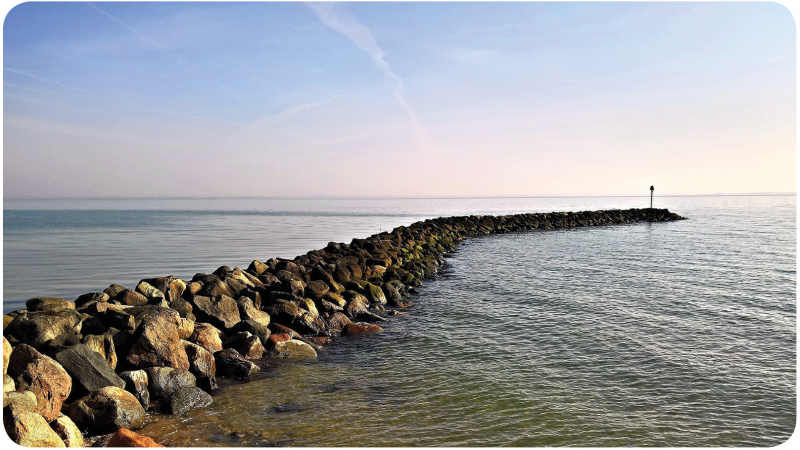
Groynes are coastal defense structures built perpendicular to the coastline, primarily used to reduce erosion and promote sediment accumulation along the shoreline. Their primary purpose is to stabilize beaches by intercepting and redistributing sediment transported by marine currents. Groynes can be made of various materials, such as natural stone, concrete blocks, or prefabricated blocks, and are often placed at regular intervals along the coast to maximize their effectiveness.
Unlike breakwaters, which are designed to dissipate wave energy, groynes work by intercepting the lateral movement of coastal currents, thus promoting the deposition of sand and other sediments along the coast, preventing erosion.
Advantages
Groynes interrupt the longitudinal transport of sediment, encouraging the accumulation of sand along beaches, thus reducing erosion. Thanks to sediment accumulation, groynes can promote beach widening, increasing the area available for tourism and recreational activities. Compared to other coastal defense structures, such as breakwaters, groynes tend to have lower construction and maintenance costs, especially in areas where natural materials are readily available. Groynes can be installed relatively quickly and with a limited initial environmental impact, compared to more invasive structures. The length, height, and placement of groynes can be adapted to local needs and specific coastal conditions.
Disadvantages, critical issues, and the need for additional measures
If not designed properly, groynes can cause accelerated erosion on adjacent beaches by reducing sediment transport to these areas. Like other coastal defence structures, groynes can alter the aesthetics of the landscape, negatively impacting tourist destinations or protected natural sites. The presence of groynes can interfere with local marine ecosystems, disrupting the natural movement of sediment and marine life. In particular, fauna that depend on mobile sediments could be affected by beach stabilization. Like other artificial reefs, groynes can interfere with fishing activities, shipping, and other maritime operations. The structures must also be designed with sea level rise projected for the coming decades in mind.
Assessment against the criteria
Applicability and impact
Efficacy
Applicability
Environmental sustainability
Reversibility
Impact
Quality of redevelopment
SDGs number
Durability
***
***
**
*
***
**
2
*****
Cost and construction logistics
Monetary cost
Construction complexity
Availability (time)
Execution time
Maintenance costs
Regionality
Use restriction
***
*
***
**
*****
***
***
Production process
Degree of innovation
Sustainability
**
***
Relationship with the indicators of the Risk Analysis Model
Local hazard: Risk contrast, natural / artificial elements.
References
xxx