


MTTM. Flood. 4. Coastal flood mitigation / storm surge interventions
4.3. Sturm surges protection gates
MTTM-FLO-4.3
Description
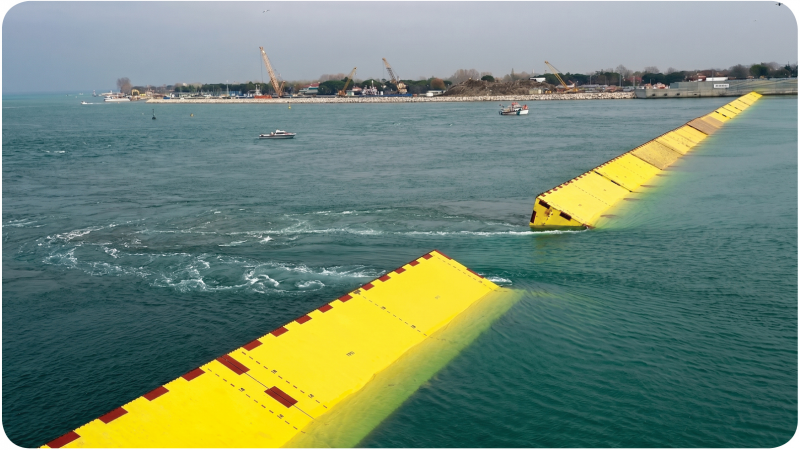
Storm surge barriers are movable structures designed to protect coastal areas from the impact of storm surges and flooding caused by a temporary rise in sea level. These systems are used in areas particularly exposed to storms and severe storm surges, and are capable of closing to block the water during extreme weather events. The floodgates are often installed at the entrances to ports, canals and other vulnerable urban areas to prevent the intrusion of seawater.
There are various types of floodgates, such as bascule gates or retractable gates, which can be activated in an emergency and then retracted once the risk has passed, minimising visual and operational impact.
Advantages
Sturm surges barriers provide direct protection against flooding caused by storms and storm surges, reducing damage to critical infrastructure and coastal urban areas. Floodgates can be activated only when necessary, ensuring protection during extreme weather events whilst allowing the port or maritime facilities to operate normally when the risk is low. These systems allow the flow of water to be regulated during storm surges and storms, preventing water from entering residential or industrial areas. Unlike permanent structures, floodgates can be retracted or concealed when not in use, reducing the visual impact on the coastal landscape. Floodgates protect vital infrastructure such as ports, coastal roads and industrial facilities, safeguarding the local economy and safety.
Disadvantages, critical issues, and the need for additional measures
The design, installation and operation of barriers systems are complex and costly undertakings, requiring significant investment and regular maintenance. Barriers are mechanical or hydraulic structures that require advanced technological management, including the implementation of emergency solutions in the event of technical problems. Although their visual impact is limited, barriers could, if not designed correctly, alter the natural flow of marine currents, affecting the ecological balance of coastal areas and altering marine habitats. Barriers must be coordinated with other defence structures and with emergency management plans in the event of natural disasters. In situations of extreme or prolonged storm surges, barriers may not be sufficient to contain the water for very long periods, requiring additional protective measures. The structures must be designed taking into account the rise in sea level predicted for the coming decades.
Assessment against the criteria
Applicability and impact
Efficacy
Applicability
Environmental sustainability
Reversibility
Impact
Quality of redevelopment
SDGs number
Durability
*****
***
***
***
***
***
4
*****
Cost and construction logistics
Monetary cost
Construction complexity
Availability (time)
Execution time
Maintenance costs
Regionality
Use restriction
*
*
**
**
***
**
***
Production process
Degree of innovation
Sustainability
**
***
Relationship with the indicators of the Risk Analysis Model
Local hazard: Risk contrast, natural / artificial elements.
References
xxx