


MTTM. Flood. 3. Construction and mechanical/electrical work
3.2. Protective walls
MTTM-FLO-3.2
Description
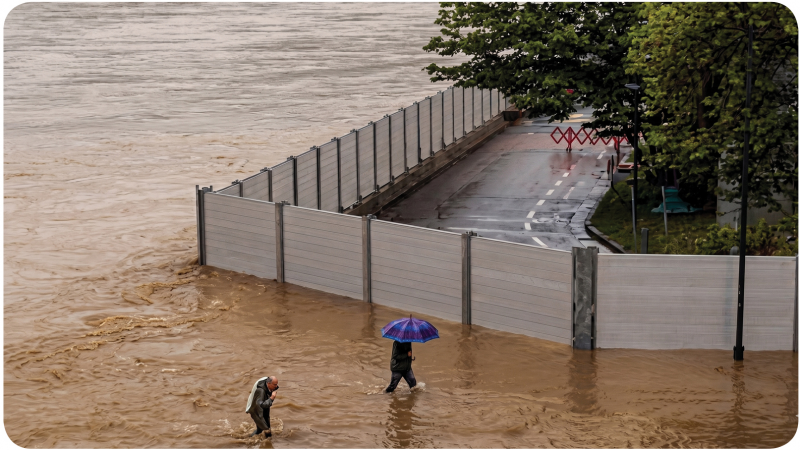
Protective walls are permanent structures built to protect sensitive areas from the effects of flooding by acting as physical barriers against water. These walls are designed to be highly resistant, constructed of materials such as reinforced concrete, steel, or prefabricated metal barriers, capable of diverting, containing, or blocking the flow of water during flood events. They can be installed along the perimeter of at-risk residential, commercial, or industrial areas, as well as along waterways prone to overflowing during heavy rainfall or flash floods.
Protective walls are often integrated with other drainage infrastructure and flood control systems, creating a multi-layered defence against flood events. Their height and strength are designed based on the severity and frequency of flooding expected for a given area, providing tailored protection to minimize flood damage. They can also be constructed with modular or sectional sections, adaptable to changing protection needs
Advantages
Protective walls provide a permanent, durable barrier that prevents floodwater from reaching structures, roads, and agricultural land. This is particularly useful in high-risk flood areas, where rapidly rising water levels can cause extensive damage to property and infrastructure. Thanks to their robustness, these walls can block water even under high pressure, keeping water out of buildings and protecting internal assets. Furthermore, the absence of water infiltration reduces structural damage, reducing post-flood repair costs and reducing the need for remediation. By blocking or diverting floodwater, protective walls relieve pressure on local drainage systems, which can easily become overloaded during flood events. This is especially important in urban areas, where drainage systems are often not designed to handle high volumes of water quickly. Walls allow water to flow in a controlled manner, reducing the risk of overflows into drainage channels and preventing local flooding that could affect roads, parking lots, and other areas critical to traffic and urban activities.
Protective walls provide crucial support for preserving vital infrastructure, such as bridges, roads, and railways, which can be severely damaged by erosion and strong currents during floods. By protecting these structures from water, walls reduce the risk of structural damage, limiting service disruptions and extraordinary maintenance costs. In rural settings, protective walls help protect agricultural land from oversaturation, which can damage crops and deplete the soil. Thanks to their containment function, they prevent floods that would destroy entire crops, reducing economic losses for farmers. These walls can be raised or extended over time, making them suitable for any climate changes or exceptional weather events.
Disadvantages, critical issues, and the need for additional measures
Constructing protective walls requires durable materials and skilled labor, resulting in considerable initial costs. Beyond the initial investment, regular maintenance is essential to ensure the walls maintain their resistance and avoid weak points that could fail during a flood.
Particularly in areas prone to frequent flooding, walls may require periodic inspections and interventions to repair any cracks or damage caused by water pressure.
Protective walls can alter the natural flow of rivers and surrounding aquatic ecosystems. By creating an artificial barrier, they can prevent the river from expanding naturally, reducing habitats for local flora and fauna. This can lead to a decline in biodiversity in protected areas, negatively impacting local ecological balances.
The construction of walls can also block natural sedimentation along riverbanks, causing soil erosion in other areas and contributing to possible long-term morphological alterations of the riverbed.
Although protective walls are designed to withstand high water levels, extreme weather events, such as particularly intense storms or sudden rises in water levels, can exceed the height of the barrier. In these cases, the walls alone may not be sufficient to provide very high levels of protection.
In contexts with a high risk of extreme events, it may be necessary to combine protective walls with other defense solutions, such as advanced drainage systems, mobile flood gates, or retention basins, to ensure complete protection
Assessment against the criteria
Applicability and impact
Efficacy
Applicability
Environmental sustainability
Reversibility
Formal and constructive impact
Quality of urban redevelopment
SDGs number
Durability
****
**
**
**
**
**
2
****
Cost and construction logistics
Monetary cost
Construction complexity
Availability (time)
Execution time
Maintenance costs
Regionality
Use restriction
**
**
**
**
***
***
***
Production process
Degree of innovation
Sustainability
*
***
Relationship with the indicators of the Risk Analysis Model
Local hazard: Contrast of risk, natural or artificial elements.
Formal vulnerability: Building protection systems.
Riferimenti
xxx