


MTTM. Flood. 1. Urban redevelopment
1.5. Draining asphalts
MTTM-FLO-1.5
Description
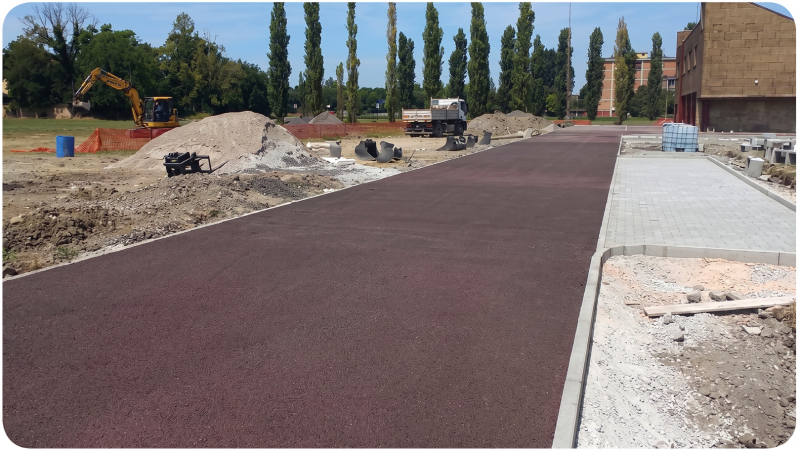
Permeable asphalt is a technology designed to allow rainwater to infiltrate through the road surface, significantly reducing surface runoff and preventing water accumulation during heavy rainfall. This type of asphalt is particularly useful in urban areas prone to flooding, as it allows rainwater to filter through the road surface rather than flowing towards drainage systems, reducing the risk of overloading drains and sewerage systems.
Permeable asphalt is composed of porous materials that create an open, permeable structure, facilitating the passage of rainwater into the subsoil. This characteristic not only aids in rainwater management but also contributes to the recharge of aquifers and the reduction of the risk of local flooding.
Advantages
By allowing water to seep directly into the road surface, porous asphalt reduces runoff into roads and drainage systems, thereby lowering the risk of flooding. Water that penetrates the asphalt does not immediately reach the drains, thus preventing the urban drainage infrastructure from becoming overloaded during heavy rainfall. Permeable asphalt helps prevent aquaplaning and puddles, reducing risks to vehicles and pedestrians. Water infiltrating the underlying layers helps to recharge aquifers, supporting underground water reserves and increasing resilience against drought. Permeable asphalt helps to reduce surface temperatures, contributing to natural cooling and improving the urban microclimate.
Disadvantages, critical issues, and the need for additional measures
To maintain their drainage effectiveness, permeable asphalt surfaces require regular cleaning to prevent blockages caused by sediment and debris.
The installation of permeable asphalt can be costly, particularly if infrastructure modifications are required to ensure proper water drainage.
In areas with poorly permeable soils, water may not infiltrate adequately once it has passed through the pavement, limiting the system’s effectiveness. The freeze-thaw cycle can reduce the lifespan and effectiveness of porous asphalt, requiring additional maintenance and more frequent replacement. Some porous asphalts may have a lower load-bearing capacity than traditional asphalts, making them less suitable for areas with heavy traffic
Assessment against the criteria
Applicability and impact
Efficacy
Applicability
Environmental sustainability
Reversibility
Formal and constructive impact
Quality of urban redevelopment
SDGs number
Durability
***
****
***
**
***
****
2
****
Cost and construction logistics
Monetary cost
Construction complexity
Availability (time)
Execution time
Maintenance costs
Regionality
Use restriction
***
****
*****
****
****
***
**
Production process
Degree of innovation
Sustainability
**
***
Relationship with the indicators of the Risk Analysis Model
Local hazard: Local territorial conditions / ground cover.
References
xxx