


MTTM. Flood. 2. Territorial redevelopment
2.2. Filter trenches
MTTM-FLO-2.2
Description
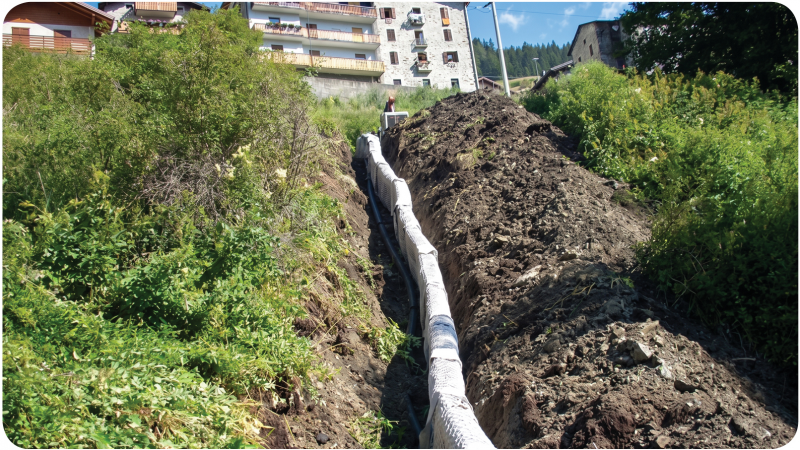
Filtration trenches are underground structures designed to manage rainwater through infiltration and filtration. They are created by excavating trenches and filling them with permeable materials such as gravel, sand and stones, or with prefabricated plastic components. The trenches are designed to allow water to infiltrate into them and for the rainwater to subsequently filter into the ground through the sides and bottom of the trench. The trenches are excavated to varying depths and dimensions depending on the volume of rainwater to be managed and the characteristics of the site.
Filling materials:
Gravel: Used to create a permeable surface through which water can flow freely.
Sand: Helps to filter the water, trapping fine particles and impurities.
Stones: Used to ensure the stability of the structure and facilitate infiltration.
Prefabricated elements: Alternatively, prefabricated elements made of plastic materials can be used, which allow for better control of water flow and filtration.
Rainwater is collected from impervious surfaces and channelled into trenches via gutters and downpipes. The water infiltrates the permeable materials of the trenches, slowly percolating into the ground through the sides and bottom of the trench. During infiltration, the trench materials filter the water, retaining sediments and impurities before the water reaches the underground aquifers.
They can be used in both urban and rural settings to manage rainwater from roads, car parks, roofs and other impervious surfaces. They are ideal for projects aimed at reducing the urban impact on the environment and improving water resource management.
Advantages
Filtration trenches help manage large volumes of rainwater, preventing rapid accumulation and flooding. Rainwater filtration helps improve the quality of the water reaching the ground, reducing pollution and contamination of aquifers. Compared to other rainwater management solutions, infiltration trenches can be more cost-effective and easier to implement in both urban and rural settings.
By channelling rainwater directly into the ground, infiltration wells reduce the volume of water that needs to be managed by drains and sewer systems, thereby lowering the risk of overloading.
During the infiltration process, infiltration wells can filter out sediments and pollutants, improving the quality of the water that reaches the aquifers.
Disadvantages, critical issues, and the need for additional measures
The effectiveness of infiltration trenches varies depending on the type of soil and its permeability. Clayey or compacted soils can reduce the effectiveness of water infiltration. In the event of heavy rainfall, the capacity of the infiltration trench may be exceeded, requiring additional measures to manage large volumes of water.
Assessment against the criteria
Applicability and impact
Efficacy
Applicability
Environmental sustainability
Reversibility
Formal and constructive impact
Quality of urban redevelopment
SDGs number
Durability
****
***
*****
***
***
***
4
****
Cost and construction logistics
Monetary cost
Construction complexity
Availability (time)
Execution time
Maintenance costs
Regionality
Use restriction
***
***
*****
****
****
***
***
Production process
Degree of innovation
Sustainability
***
****
Relationship with the indicators of the Risk Analysis Model
Local hazard: Local territorial conditions / ground cover; Local hydrographic conditions.
Formal vulnerability: Building protection systems.
Riferimenti
xxx